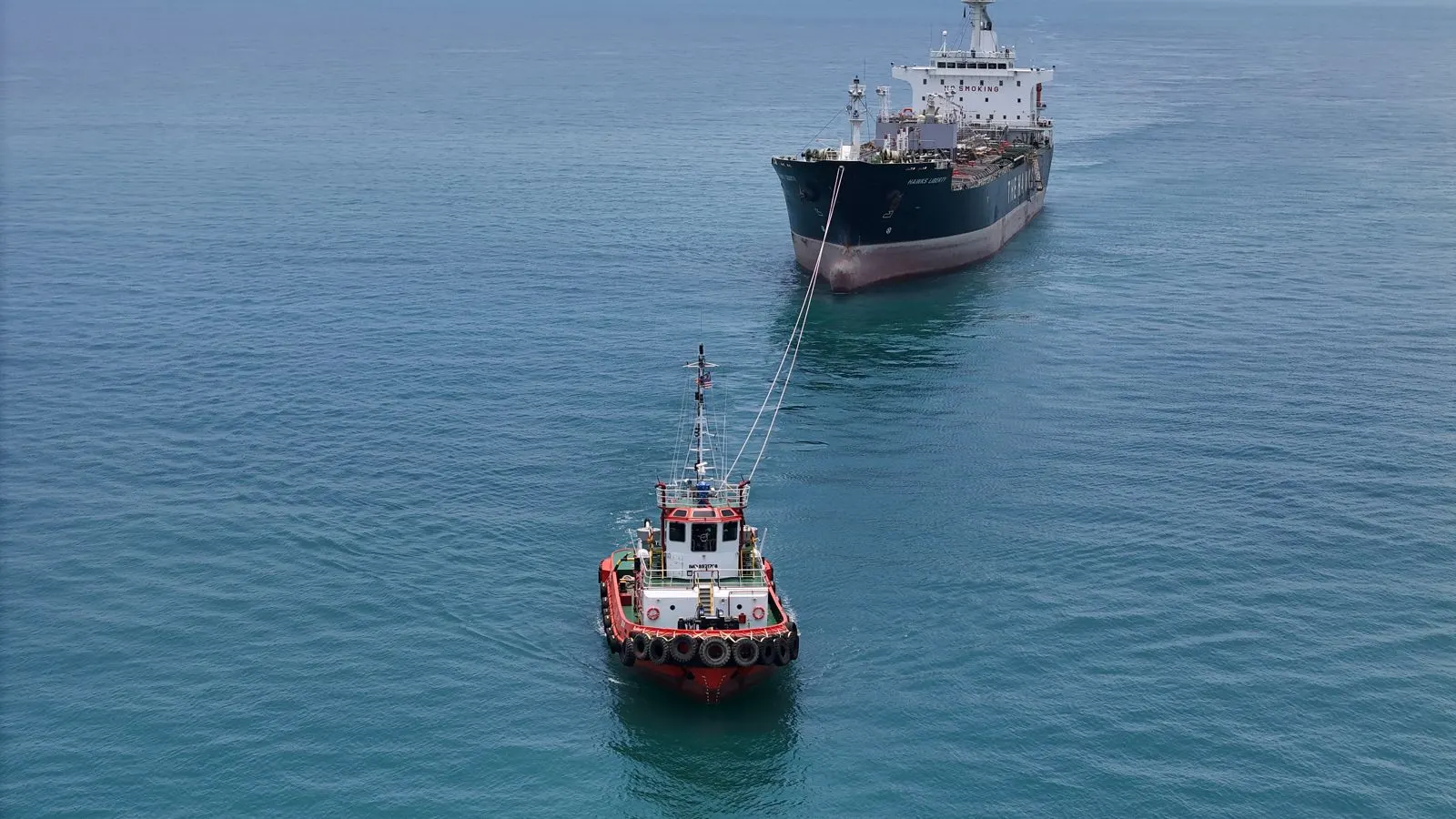
02°31′N 101°48′E
 NS Maritime Sdn Bhd nsmaritime.my
Home/Port Info/Guide to Port Entry
Guide to Port Entry: Port Dickson
What masters, agents and terminals need before a ship calls at Port Dickson, from arrival to departure, with the official sources for each step.
Edition of 4 November 2026. Published by NS Maritime Sdn Bhd.
For information. The Marine Department of Malaysia is the port authority for Port Dickson. Its port circulars, notices and instructions take precedence over this guide. NS Maritime is the port operator, not the port authority.
A ship's call, step by step
- Before arrivalRead the port circulars and book marine services
- Ship reportingSTRAITREP reports and your ETA to NS Port Control
- Pilot boardingPilot, tugs and mooring planned together
- Berth or anchorageTerminal jetty, anchorage or lay up point
- ClearanceCustoms, Immigration, health and quarantine
- DeparturePilot, tugs and mooring for sailing
1. Port at a glance
- Port
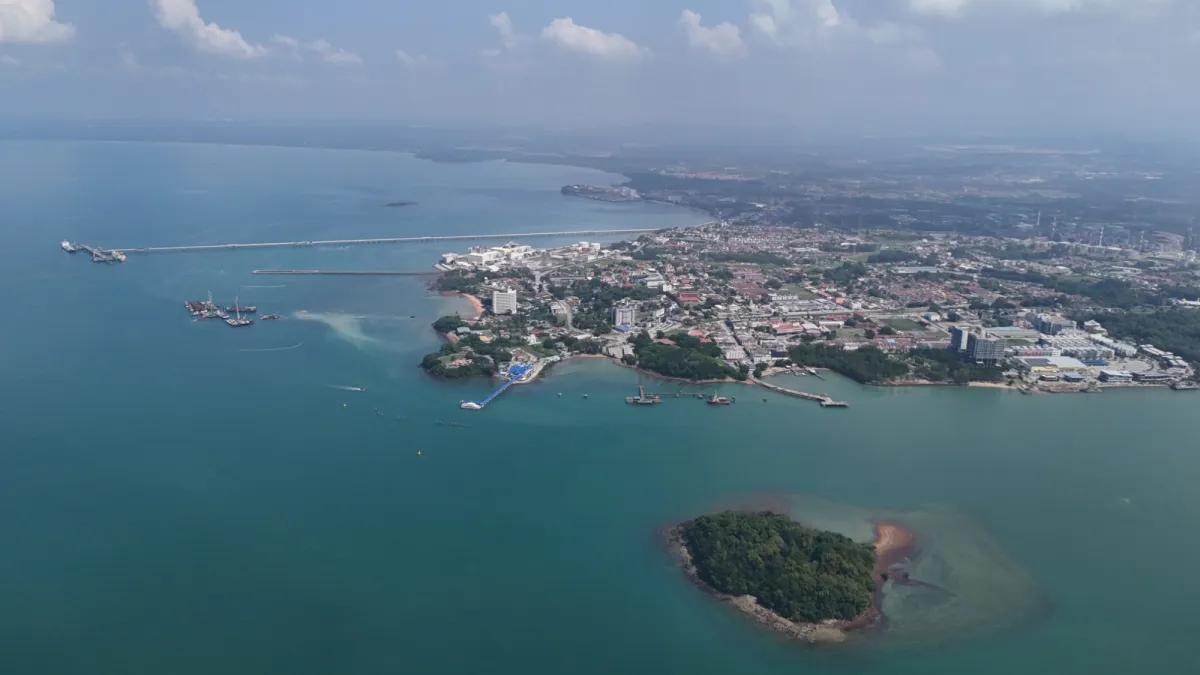
- Port Dickson, Negeri Sembilan, Malaysia. The port comes under the Central Region of the Marine Department.
- Port authority
- Marine Department of Malaysia (Jabatan Laut Malaysia). Port Dickson marine office, Jalan Raja Aman Shah, 71000 Port Dickson, +60 6-647 7993, ppdks@marine.gov.my
- Port operator
- NS Maritime Sdn Bhd, a joint venture of NS Corporation and Don Maritime Sdn Bhd
- Port limit
- Port Dickson port limit (PDF) (opens in a new tab), from the Marine Department
- Chart
- MAL 5239, Sekitar Perairan Port Dickson, 1:30,000
- Tides
- Tide predictions for Port Dickson (opens in a new tab), National Hydrographic Centre
- Weather
- Marine forecast for Negeri Sembilan waters (opens in a new tab), MetMalaysia
2. Before arrival
- 48 hbefore arrivalPre Arrival Notification, for ISPS ships bound for a designated facility
- 24 hbefore arrivalCargo manifest to customs
- Arrivalat onceReport the ship's arrival to customs
- 24 hbefore departureOutward manifest to customs
- Departurebefore sailingPort clearance from customs
- Read the Marine Department's port circulars (opens in a new tab). Those for Port Dickson are listed under Wilayah Tengah (Central Region). The latest ones are listed under Port notices on Port Info.
- Check the notices to mariners (opens in a new tab) from the National Hydrographic Centre.
- Book pilots, tugs and mooring crews through NS Port Control. Send the vessel name and IMO number, ETA and ETD, berth, terminal or anchorage, length overall and draft, and the services needed.
- Arrival and departure are registered with the Marine Department through its online Ship Clearance System (SCS) (opens in a new tab). Since 31 July 2012 all applications for arrival and departure clearance are made online, normally by the ship's agent.
- The master or agent presents the cargo manifest to customs at least 24 hours before arrival at a customs port, and the outward manifest at least 24 hours before departure, unless the Customs Department sets a shorter period (Customs Act 1967, sections 52 and 57).
- Passenger ships, cargo ships of 500 gross tonnage and upwards and mobile offshore drilling units bound for a designated marine facility send the Pre Arrival Notification to the Maritime Transport Security Officer at least 48 hours before arrival (Merchant Shipping Ordinance 1952, section 249o(1); MSN 38/2010).
3. Ship reporting
STRAITREP is the mandatory ship reporting system for the Straits of Malacca and Singapore, adopted by the IMO (resolution MSC.73(69), in force since 1 December 1998). It covers the Straits between longitudes 100°40′E and 104°23′E. Ships in that area, including those leaving port or anchorages there, report as follows.
Klang VTS
Johor VTS
Singapore VTS
STRAITREP sectors and their VHF channels, from IMO resolution MSC.73(69). The diagram is not to scale and does not show sector limits.
- Who reports
- Ships of 300 GT and above; ships of 50 m or more; tows of 300 GT or 50 m combined; ships of any size carrying hazardous cargo; passenger ships fitted with VHF
- When
- On entering the reporting area, and when leaving port or anchorages in the area
- To whom
- Klang VTS of the Marine Department for sectors 1 to 5 (VHF channels 66, 88, 84, 61 and 88), Johor VTS for sector 6 (channel 88), in English
- What
- Ship name and call sign, position, hazardous cargo, defects and any pollution, in the STRAITREP format
Under Malaysia Shipping Notice MSN 03/2026, the Marine Department is trialling electronic STRAITREP reporting from 1 May to 31 December 2026, as an alternative to reporting by VHF. Reports go through jlm.enav.my (opens in a new tab) or to straitrep@marine.gov.my, within 24 hours before the ship enters the reporting points of sectors 1 to 6.
The sector limits are shown on the chartlets of the IMO resolution. This guide does not say which sector covers the waters off Port Dickson; check the resolution and the current notice before sailing.
NS Port Control is NS Maritime's coordination desk. It assists the port authority with communication to vessels during arrival and departure, plans the deployment of marine assets and pilots, and provides information to the terminals.
NS Maritime runs a vessel traffic management system (VTMS) on a voluntary basis. Its proposal to the Marine Department for an official Vessel Traffic Service for Negeri Sembilan waters, NS VTS, has not yet been approved. See Port management.
4. Pilotage and towage
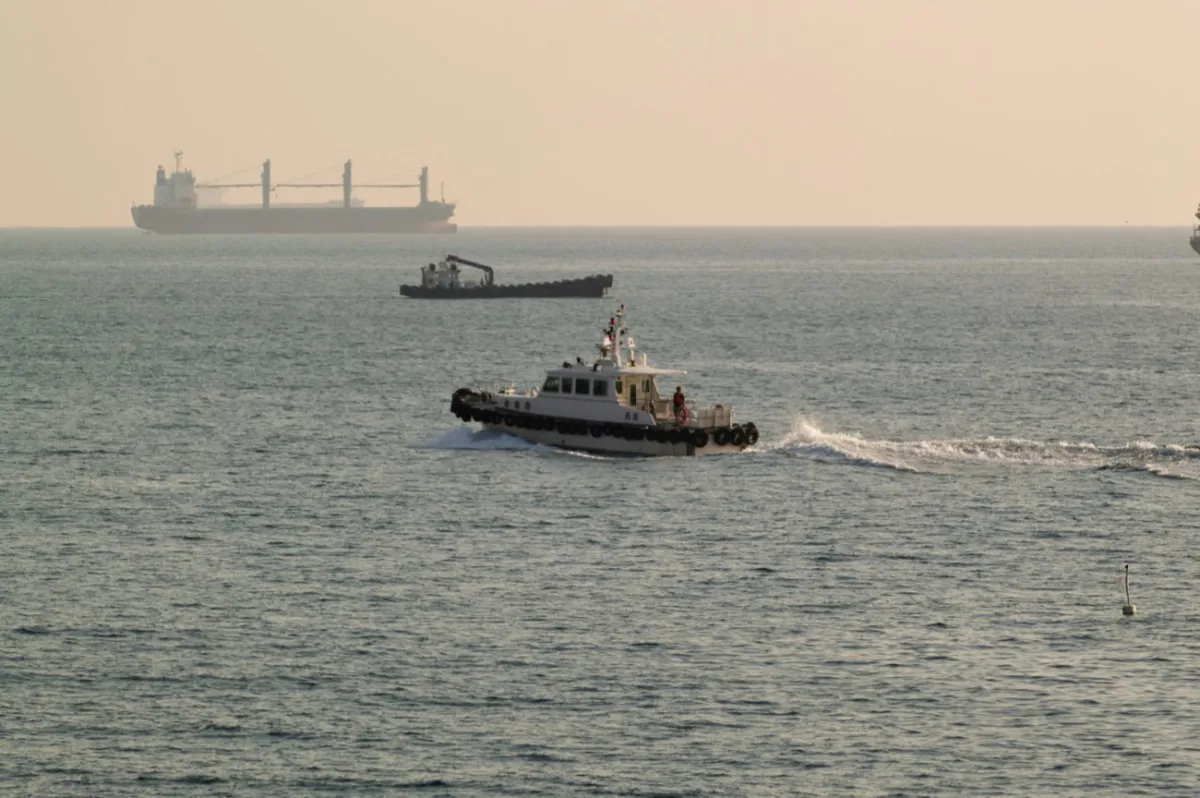
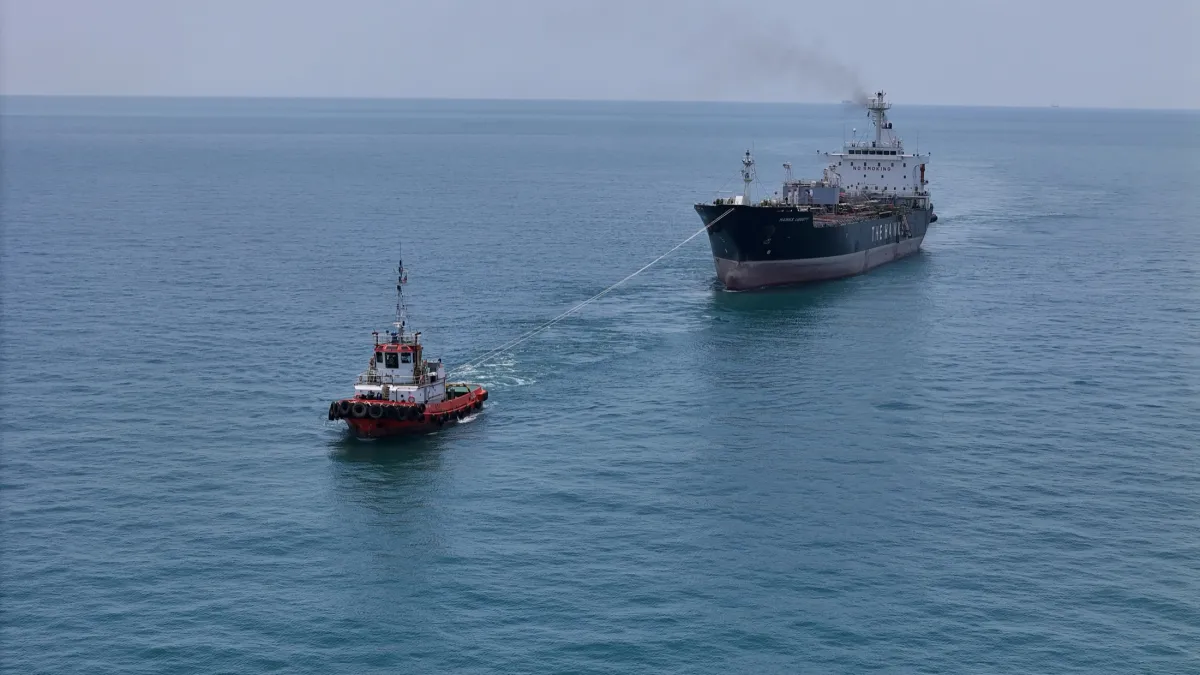
- Pilotage and towage at Port Dickson are delivered through the Don Maritime Group, planned by NS Port Control together with the mooring boats and mooring gangs for each arrival and departure. See Pilotage, Towage and Mooring and unmooring.
- Safe pilot transfer arrangements are mandatory. Under Malaysia Shipping Notice MSN 55/2011, failing to provide safe access for the pilot may be prosecuted under the Merchant Shipping Ordinance 1952, and pilot transfer arrangements are checked under port state control.
5. Anchorages and lay up
Anchoring follows the port authority's instructions and port circulars. The port limit is described in the Marine Department's port limit description (opens in a new tab).

- Lay up point 1
- 02°30.892′N 101°44.687′E 15 m water, 1.8 miles offshore
- Lay up point 2
- 02°30.906′N 101°45.228′E
Both lay up points are approved by Jabatan Laut Malaysia (Central Region) for NS Maritime. Hot lay up is arranged through NS Maritime, with an operating approval sought from the Marine Department for each vessel. See Lay up.
6. Terminals and berths
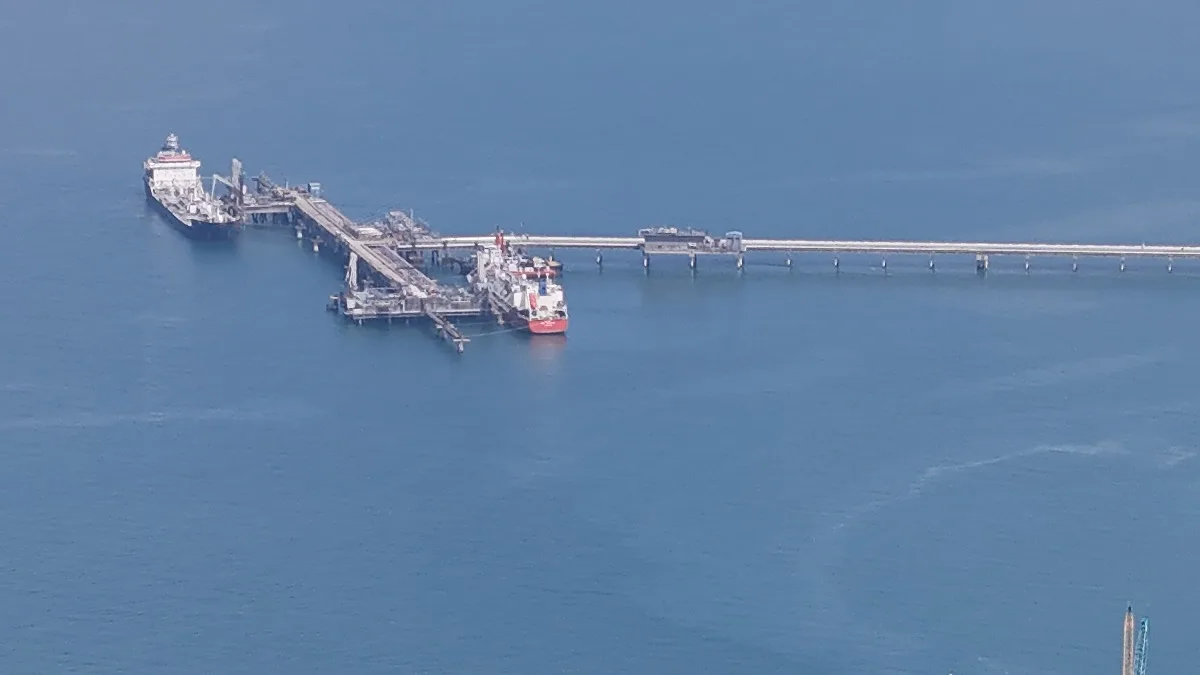
- HRC terminal Refinery jetty with three berths. Operator: Hengyuan Refining Company Berhad.
- Petron SBM Single buoy mooring linked to the Petron refinery by a subsea pipeline, at 02°30.216′N 101°45.372′E. Owner: Petron Malaysia Refining & Marketing Berhad.
- Tuanku Muhriz power station jetty Coal jetty of TNB's power station at Mukim Jimah.
- Jimah Energy Ventures jetty Jetty of the 1,400 MW coal fired power plant at Mukim Jimah, running 1.3 km out to sea.
- NSC jetty Operator: NS Maritime, on lease from NS Corporation.
- Port Dickson passenger jetty Owned and licensed by the Marine Department. Operator: NS Maritime.
Berth particulars and operators are on Port Info. Berthing at each terminal is arranged with its operator.
7. Clearance
The Marine Department, Customs, Immigration, the health office and the Department of Agriculture have offices at the Port Dickson passenger jetty terminal.
- Report arrivalTo customs, at once, with the last port's clearance
- ExaminationImmigrationHealthQuarantineNobody boards or lands until immigration has examined the ship
- CargoGoods landed or loaded with customs permission
- Port clearanceFrom customs before the ship sails
- The master, in person or through the agent, reports the ship's arrival at a customs port to the proper officer of customs at once, gives the information asked for on the ship, cargo, crew and voyage, and produces the last port's clearance on demand (Customs Act 1967, section 36).
- A ship may not leave a customs port until the proper officer of customs has granted a port clearance to the master or agent. The clearance is carried on board while the ship is in Malaysian territorial waters (sections 37 and 38).
- No craft may go alongside an ocean going ship, or alongside a legal landing place, without the permission of the proper officer of customs (section 49).
- Until an immigration officer has examined the ship, nobody other than the pilot, government officers on duty, the owner, charterer or agent, or a consular officer may board or leave it. The master gives the immigration officer the crew list, produces the crew for inspection and gives the general declaration of the FAL Convention, on arrival and on leaving (Immigration Act 1959/63).
- Health officers may board and medically examine any ship on its arrival in Malaysia, and the people, animals and articles on board (Prevention and Control of Infectious Diseases Act 1988, section 7).
- The Malaysian Quarantine and Inspection Services (MAQIS) may inspect plants, animals, fish, agricultural produce and conveyances, including vessels, at entry points, and may refuse entry (Act 728, section 9). The Act lists two entry points by sea at Port Dickson: the railway jetty, and the jetty of Jimah Energy Ventures at Mukim Jimah.
- Goods brought in by sea may be landed only at a legal landing place, with permission from the proper officer of customs, and on the prescribed days and times unless other times are allowed (Customs Act 1967, section 23). The same applies to loading goods for export (section 26).
8. Emergencies and pollution
- Anyone in distress at sea, or who knows of a maritime emergency, contacts Maritim Malaysia's maritime rescue coordination centre (MRCC) or a sub centre as soon as possible, with accurate information. The centres run 24 hours a day, 7 days a week. Reports can also be made at the nearest maritime district office or police station, or by calling 999. MRCC Putrajaya: +60 3-8941 3140.
- Every oil spill must be reported immediately to the Department of Environment, through its online complaint system or its hotline 1-800-88-2727. The department's Negeri Sembilan office is in Seremban, telephone 06-764 9017.
- The Marine Department is the On Scene Commander for oil spill clean up at sea, and Maritim Malaysia leads the response to maritime accidents and emergencies involving life and property.
- Maritim Malaysia (the Malaysian Maritime Enforcement Agency) carries out maritime search and rescue. Its state headquarters for Melaka and Negeri Sembilan: 06-387 6730. Hotline: 03-8943 4001.
- NS Maritime keeps oil spill response, fire fighting and rescue on standby for the terminals, anchorages and jetties. See OSR, fire fighting and rescue.
Oil spill response tiers, from the Malaysia Oil Spill Contingency Plan (MOSCoP), 2023.
9. Contacts
- NS Port Control (NS Maritime)+60 6-647 3000
general@nsmaritime.my - Port Dickson marine office+60 6-647 7993
ppdks@marine.gov.my - Emergency999
MRCC Putrajaya +60 3-8941 3140 - Customs, Port Dickson stationJalan Raja Aman Shah, 71000 Port Dickson
+60 6-647 1353 - Maritim MalaysiaState headquarters 06-387 6730
Hotline 03-8943 4001 - Department of EnvironmentOil spill hotline 1-800-88-2727
Negeri Sembilan office 06-764 9017
10. Sources
Each fact in this guide is taken from the official source below. Check the source before relying on it.
- IMO1
- Marine Department7
- Laws of Malaysia5
- Customs1
- Hydrographic Centre1
- Department of Environment1
- Maritim Malaysia2
- Marine Department of Malaysia, Port Dickson port circulars (port authority and office)
- Marine Department of Malaysia, Port Dickson port limit
- National Hydrographic Centre, chart MAL 5239
- Marine Department of Malaysia, MSN 55/2011, Safety of pilot transfer arrangements
- IMO resolution MSC.73(69), STRAITREP
- Marine Department of Malaysia, MSN 03/2026, electronic STRAITREP reporting trial
- Marine Department of Malaysia, notice 05/2012, online Ship Clearance System
- Marine Department of Malaysia, MSN 38/2010, Pre Arrival Notification
- Customs Act 1967 (Act 235), port clearances and manifests
- Royal Malaysian Customs Department, customs offices
- Immigration Act 1959/63 (Act 155)
- Prevention and Control of Infectious Diseases Act 1988 (Act 342)
- Malaysian Quarantine and Inspection Services Act 2011 (Act 728)
- Malaysian Maritime Enforcement Agency, maritime search and rescue
- Marine Department of Malaysia, Senarai Operator Labuh Tunggu (lay up operators)
- Customs Act 1967 (Act 235)
- Department of Environment, Malaysia Oil Spill Contingency Plan (MOSCoP), 2023
- Malaysian Maritime Enforcement Agency, functions and directory
This guide is for information. It does not replace the port authority's circulars and instructions, the ship's own passage planning or official charts. Not for navigation.